

A new study analyzing the first 17 days of Israel’s bombardment in the Gaza Strip found that the Gaza Ministry of Health’s death toll, a subject of debate at the time, was reliable.
The study, conducted by Airwars, a British organization that assesses claims of civilian harm in conflicts, added to previous research suggesting that the Health Ministry’s figures in the early days of the war were credible.
In late October, the Health Ministry published the names of about 7,000 people who had been killed in the first 17 days of the war. Of the thousands of Israeli airstrikes and other explosions during that time period, only a fraction — 350 events — were analyzed by Airwars for the study released Wednesday. Airwars said it was able to independently identify 3,000 names, most of which matched the ministry’s list.
As a result, Airwars said, it felt confident the ministry’s casualty reporting system at the beginning of the war was reliable and that it was working to analyze additional strikes and explosions.
Airwars reported that more recent ministry figures had become less accurate after the destruction of the territory’s health system.
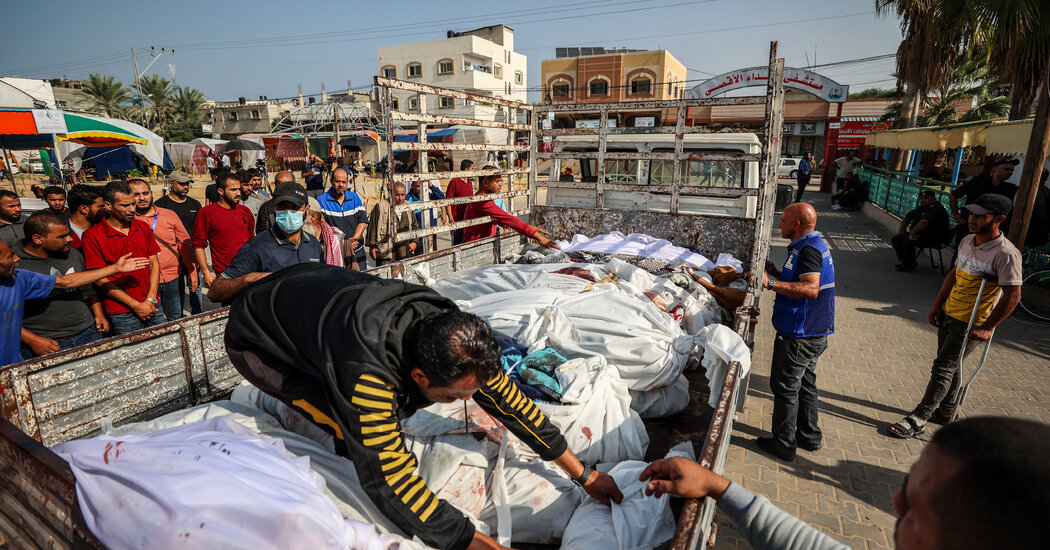
The war has, however, clearly devastated the civilian population in Gaza. On Wednesday, the ministry, whose death toll does not distinguish between civilians and combatants, said that more than 39,000 people had been killed.
The ministry is ultimately overseen by Hamas, and Israeli officials have expressed skepticism about its accuracy. Early in the war, before the Health Ministry released its list, President Biden said he had “no confidence in the number that the Palestinians are using,” though he and other American officials have since expressed more confidence in them, urging Israel to do more to protect civilians.
Israel says that it tries to avoid civilian casualties, but notes that Hamas often bases its forces in densely populated urban areas.
Airwars focused its research only on the early days of the conflict. It said that there were far more other strikes and explosions apart from the nearly 350 it documented during the period.
About 75 percent of the names documented by Airwars appeared on the health ministry’s October list, a rate that showed that “both capture a large fraction of the underlying reality,” said Mike Spagat, a professor at Royal Holloway College at the University of London who reviewed the findings and advised on the research process.
Many international officials and experts familiar with the way the health ministry verifies deaths in Gaza — drawing on information from morgues and hospitals across the territory — say its numbers are generally reliable. But there is evidence that the quality of the data has declined, as infrastructure has collapsed in many parts of the territory. In December, after many hospitals had closed, the health ministry announced it was supplementing its hospital and morgue-based tally with “reliable media sources.”
In its analysis, Airwars verified that at least some militants were included on the list of those killed in the first three weeks of the war. Israel’s military said in July that it had killed or captured around 14,000 combatants in Gaza since the war began, a number that cannot be independently confirmed.
In one instance, an Israeli airstrike on Oct. 19 targeted and killed Maj. Gen. Jihad Muheisan, commander of the Hamas-run National Security Forces, along with 18 members of his family, including nine children and six women, Airwars found. General Muheisan and all but one of the 18 were included on the Health Ministry’s list.
Because Airwars only analyzed incidents in which civilians were reportedly harmed, researchers said they could not estimate how many militants were included on the health ministry’s list.
Other studies have also backed the reliability of the ministry’s early death toll.
Johns Hopkins researchers found that there was no evidence that it was inflated through early November. And researchers from the London School of Hygiene and Tropical Medicine who analyzed ID numbers from the October list found there was “no obvious reason” to doubt the data.
Airwars used the same methodology in its Gaza analysis as it has for conflicts in Iraq, Syria, Ukraine, Libya and others, said Emily Tripp, the group’s director.
The pace of those killed in Gaza in October stands out, she said. Airwars tracked more allegations of harm to civilians in October than in any month in its decade of monitoring, according to the report, including the U.S.-led fight against Islamic State and Russia’s bombardment of Syria. About a quarter of those included at least 10 civilians reportedly killed, which is much higher that other conflicts it has monitored.
“We have, per incident, more people dying than we’ve seen in any other campaign,” Ms. Tripp said. “The intensity is greater than anything else we’ve documented.”

