

Israel killed Hezbollah’s leader and struck Yemen
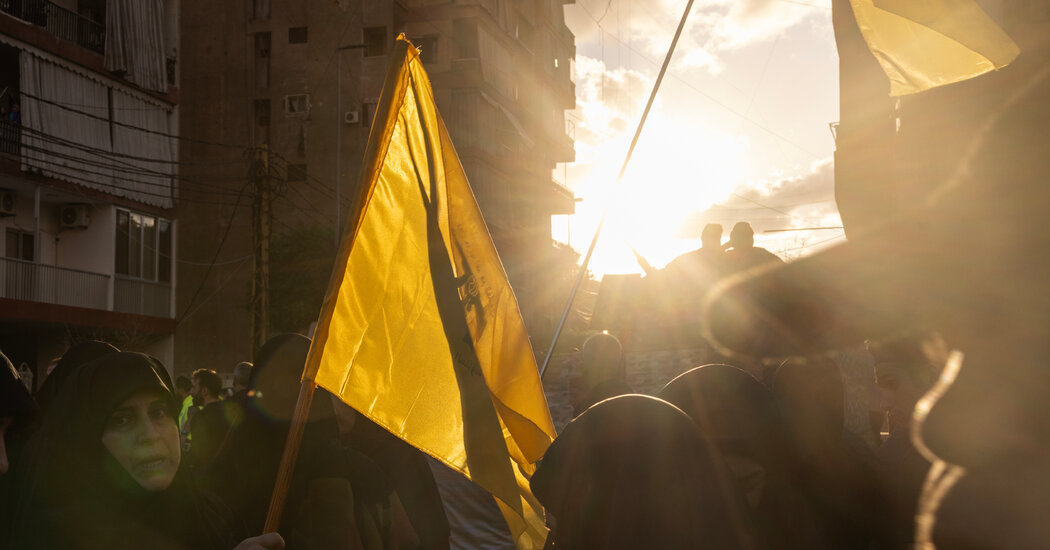
Hezbollah’s leader, Hassan Nasrallah, was killed on Friday near Beirut, Lebanon, in an attack that Israel’s military said had hit the militia’s headquarters. Nasrallah was a beacon for anti-Israel forces across the Middle East and beyond, and his death is a major blow to Hezbollah.
Hezbollah and Israel’s military chief of staff vowed to continue fighting, and Israel continued to bombard Lebanon over the weekend. Israel also expanded its targeting of Iran-backed militant groups yesterday, striking Yemen after Houthi fighters aimed missiles at Israel. At least four people were killed in the strikes in Yemen.
Israel’s strike on Nasrallah was the culmination of several startling moves that suggest the Israeli prime minister, Benjamin Netanyahu, feels unconstrained by foreign criticism, analysts say. His authorization of the strike came on the same day that foreign diplomats walked out of his speech to the U.N. General Assembly.
In Iran, fissures have opened within the Iranian government over how to respond to Nasrallah’s killing. Significantly, Ayatollah Khamenei signaled that it would be Hezbollah, not Iran, that would be leading any response to Israel.
Details: Two senior Israeli defense officials told The Times that more than 80 bombs were dropped to kill Nasrallah. A Times analysis showed that the attack destroyed at least four apartment buildings, and the damage was consistent with 2,000-pound bombs.
Analysis: Over almost a year of war in the Middle East, major powers have proved incapable of stopping or even significantly influencing the fighting, my colleague, Roger Cohen, writes. After the killing of Nasrallah, the Western-led attempt to broker a peace agreement between Israel and Hezbollah seems uncertain. These failures reflect a turbulent world of decentralized authority that seems likely to endure.
Trump called Harris “mentally disabled”
Donald Trump unleashed a string of sharply personal attacks against Vice President Kamala Harris at a rally this weekend, calling her “mentally impaired” and “mentally disabled.” It was a startling series of broadsides in the midst of a presidential campaign, even for a candidate who seems to delight in offensive remarks.
“Joe Biden became mentally impaired,” he said. “Kamala was born that way.”
His remarks quickly drew rebukes from Republicans and Democrats alike. Lindsey Graham, a Republican senator from South Carolina, said he thought “the better course to take is to prosecute the case that her policies are destroying the country.” Larry Hogan, former governor of Maryland and an anti-Trump Republican, called the remarks “insulting” both to Harris and to “people that actually do have mental disabilities.”
More on the U.S. election
Americans head to the polls in less than 40 days.
-
In recent weeks, the Republican National Committee has filed a barrage of election lawsuits across the swing states. Here’s a guide to the five cases that could matter most.
-
Donald Trump’s running mate, JD Vance, and Vice President Kamala Harris’s running mate, Tim Walz, used this weekend to prepare for the vice-presidential debate scheduled for tomorrow.
-
Autumn in America is prime time for political campaigning and college football. The two collided when Trump and Walz attended big games in the swing states of Michigan and Georgia this weekend.
Do you have questions about the election? Send them to us, and we’ll find the answers.
Hurricane Helene tore through the southeastern U.S.
Hurricane Helene carved a devastating path from Florida’s Gulf Coast to Tennessee, decimating some communities and killing more than 60 people across the region. We mapped the destruction, which stretched for more than 600 miles.
The damage caused by Helene is severe across the region, and the storm created a major crisis in western North Carolina. More than 1,270 rescuers have been deployed, but with landslides and knocked out power, many states remain paralyzed. Officials say the death toll is likely to rise.
MORE TOP NEWS
Last week, New York City’s mayor pleaded not guilty after he was accused of accepting more than $100,000 in illegal gifts in exchange for using his political influence to help Turkey. A reporter and photographer for The Times retraced one of Adams’s lavish trips to Istanbul, flying in business class on Turkish Airlines and spending a night at a $2,500-per-night luxury hotel suite — for which Adams reportedly paid only $300.
Lives lived: Maggie Smith, among the most venerable British actors of her era, died on Friday at 89.
CONVERSATION STARTERS
Ta-Nehisi Coates ruminates on the power of writing
Ta-Nehisi Coates’s breakthrough memoir, “Between the World and Me,” made an immediate impact when it was published in 2015, the fraught tail end of the Obama era, and catapulted him to prominence in the public conversation on race.
Nearly 10 years later, the country and the world are in the midst of another contentious moment. Coates has returned with a hybrid of memoir and reportage, “The Message.” The book consists of three journeys — to Senegal, South Carolina and the West Bank — that powerfully haunted Coates. In a video interview with The Times from his home in New York, he reckoned with his wavering faith in journalism, as well as his need to keep exploring, questioning and writing.

